
Cooke County Sex Offender Checks
The Texas Public Sex Offender Registry is the main public search for Cooke County. Texas DPS collects information sent by the law enforcement office that registers each person. A person living inside Gainesville registers with Gainesville Police. A person living outside a municipality reports to the Cooke County authority. That division explains why the statewide record and the local office both have a role.
Begin a Cooke County search with facts that help distinguish one result from another. A full name is useful, but birth data and physical details in a returned profile help prevent a bad match. For place-based awareness, search an address, city, ZIP code, or the county itself. Review both the list and map context when the live portal offers them. Addresses change, and the static map controls may change too, so never assume a fixed search radius that the current screen does not show.
The Cooke County registry search is free. It answers a narrow safety question about people whose Texas law requires public registration. It does not replace local court files, arrest records, or the broader Cooke County criminal history channels.
Cooke County Registration Offices
Local registration follows residence. The Cooke County Sheriff Criminal Investigation Division identifies a sex-offender registrar and takes calls at 940-665-3471, option 4. Gainesville Police handles registration inside Gainesville and lists 940-668-7777 as its registry contact. The local authority verifies required facts, carries out notices required by law, and sends the record to DPS for the public Texas system.
Cooke County Sheriff CID
300 County Road 451
Gainesville, TX 76240
940-665-3471, option 4
Registration and suspected noncompliance outside a municipality.
Gainesville Police
201 Santa Fe
Gainesville, TX 76240
940-668-7777
City registration, local maps, and city child-safety-zone information.
Call the correct registering office when an address or status appears stale. Give the profile details and explain the suspected mismatch. Use emergency services only when there is an immediate threat. A routine Cooke County data question belongs with the registrar, not an emergency line.
Texas Public Sex Offender Registry Searches
Texas DPS offers both name and geographic routes for Cooke County. The official registry search screen shows how a Cooke County search begins. The interface can change, so read its current legal notice and controls before submitting a Cooke County sex offender lookup.
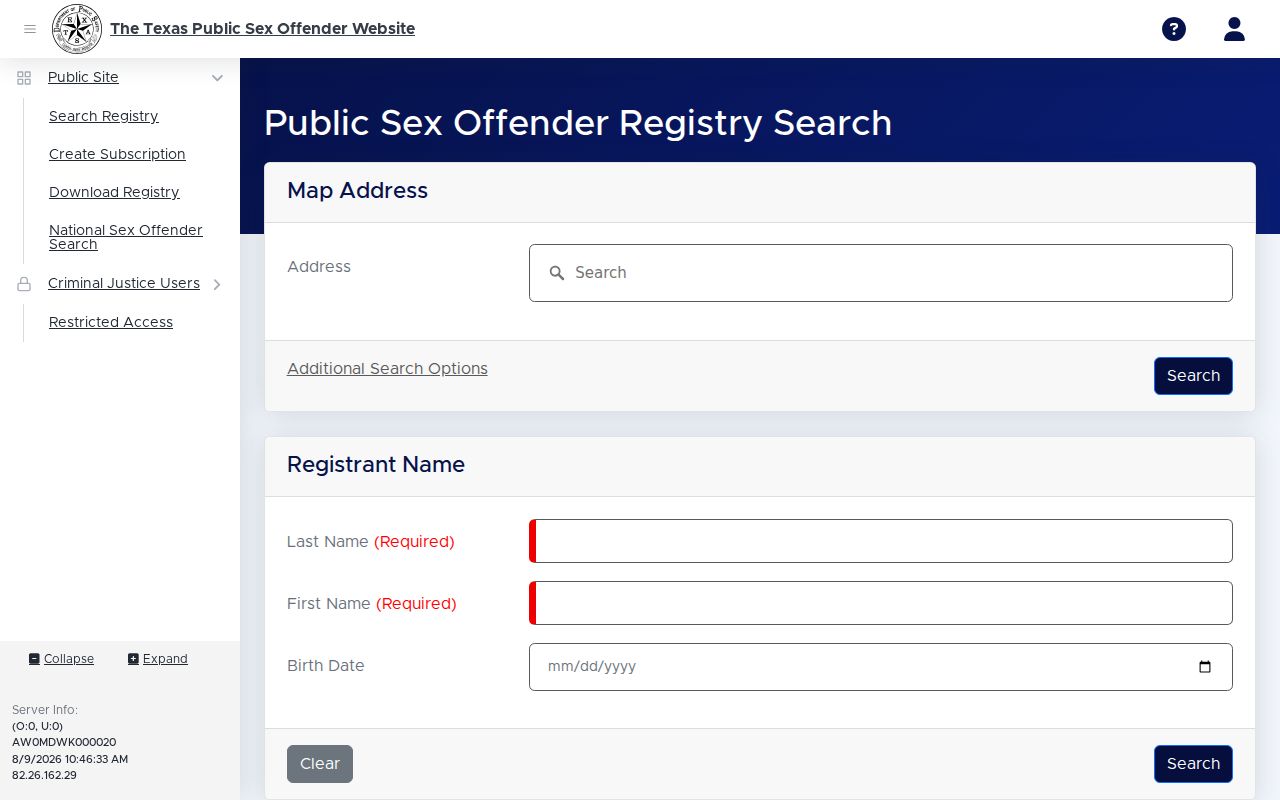
The screen gives local residents a direct official source for name, address, city, ZIP, county, list, and map searches without relying on an unofficial people-search service.
- Open the DPS registry and read the conditions governing lawful use.
- Choose a name search or a geographic search. Enter the known facts and select Cooke for a county-wide query.
- Review possible results in list or map context. Compare aliases and physical identifiers rather than relying on a name alone.
- Open the official profile and read its offense, address, status, and registration details together.
| Field label | Type | Required | Use |
|---|---|---|---|
| Last Name | Text | Route-dependent | Main name-search field |
| First Name | Text | Optional narrowing | Reduces broad surname matches |
| Address | Text | Route-dependent | Starts a place-based search |
| City or ZIP | Text or selection | Optional | Narrows the geographic area |
| County | Dropdown | Optional | Select Cooke for county results |
| Map or radius | Map control | Optional | Use the options shown by the live portal |
Three Cooke County Registry Routes
A Cooke County name search is best when the person is known. An address or county search is better for community awareness around a place. The National Sex Offender Public Website, run through the U.S. Department of Justice, adds a cross-state search when a person may have moved or when the area of concern crosses Texas borders.
- DPS name search
- Start with a name and profile identifiers; similar names require careful matching.
- DPS geographic search
- Start with an address, city, ZIP, or Cooke County; a map marker does not describe all residents.
- NSOPW search
- Start with a name or place across jurisdictions; the participating registry remains the source.
The national service is visible in the official NSOPW search interface, where a Cooke County inquiry can cross state lines.
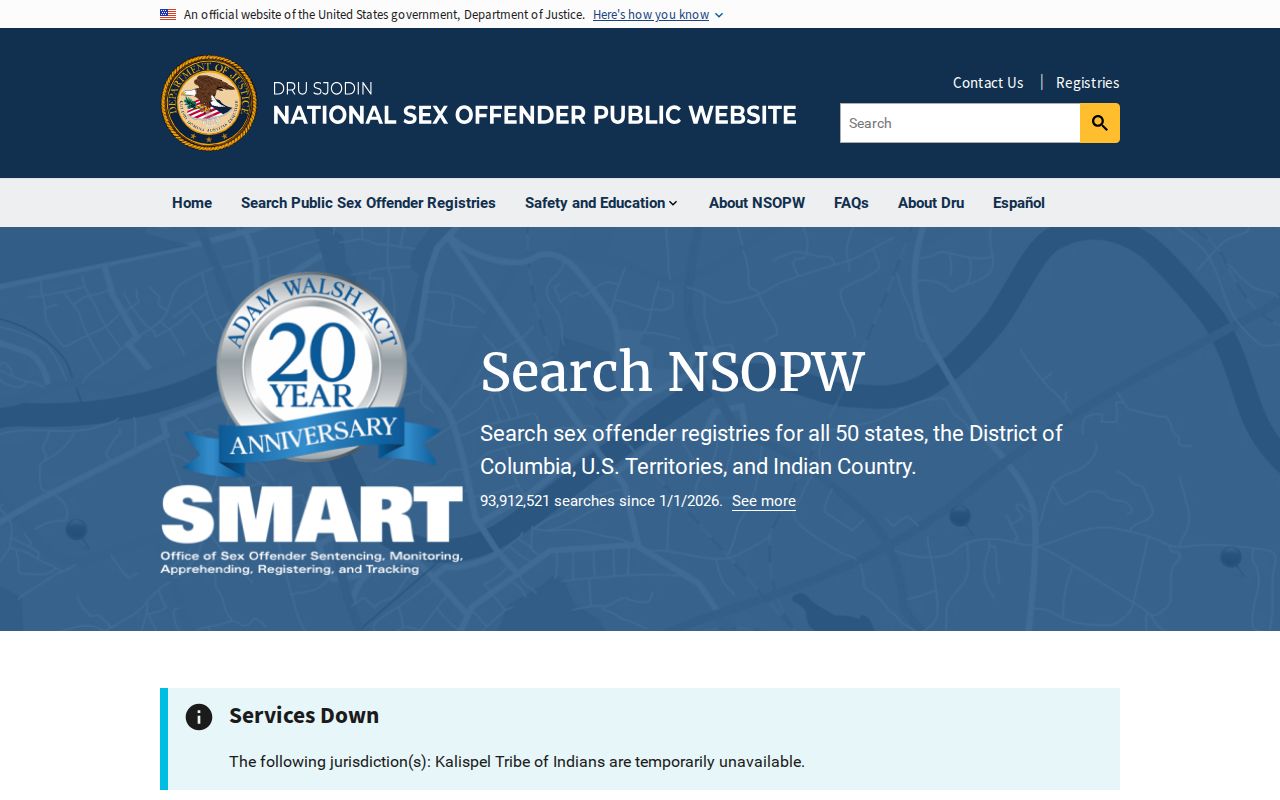
Use that wider layer to find the participating registry, then return to the Texas source for the most direct local profile and registration context.
Registry Profiles: What They Show
A Cooke County public profile brings several facts together, but it is not an unrestricted case file. Read the identity, registered location, reportable offense, and current registration status as a whole. The photo and descriptors can help distinguish people with similar names. The offense entry identifies the reportable conviction or adjudication and its jurisdiction; it should not be expanded into claims the profile does not make.
| Name and aliases | Published identity names connected with the registration record. |
|---|---|
| Photo and description | Current color photograph, age or birth data, sex, race, height, weight, hair, eyes, and identifying marks where published. |
| Registered location | The address or location reported under registration rules. |
| Offense record | Reportable offense, statute or jurisdiction, and conviction or adjudication date. |
| Risk information | A designation where Texas law and the record make one public. |
| Status and vehicles | Registration or reporting status and qualifying vehicle information where applicable. |
DPS does not publish Social Security numbers, driver-license numbers, phone numbers, online identifiers, employer details, victim-identifying information, or additional DPS-only data on a public profile. A juvenile court can also order juvenile registration nonpublic. Those boundaries protect information that is not part of the public safety display.
Cooke County Registry Map Limits
A Cooke County registry pin identifies a reported location tied to one Cooke County registration record. It does not say that every person at the address is registered, and it does not establish current conduct. Multi-unit addresses, changes submitted to an agency, and map placement can all require a closer read of the underlying Cooke County profile.
Cooke County city rules also need city boundaries. Gainesville publishes child-safety-zone ordinances and maps, but that does not create a Cooke County residency rule. Do not apply a Gainesville map to rural Cooke County or another municipality. Ask the relevant Cooke County city or county registration office about the law that applies to a specific location.
Cooke County registry absence has a limit too. The Cooke County public search covers people subject to public Chapter 62 registration. It is not a clean-record letter, a court disposition search, or proof that a person has never been arrested in Cooke County.
Registration Levels and Duties in Texas
Texas does not place every public profile into a simple federal Tier I, II, or III duration chart. Code of Criminal Procedure Chapter 62 ties the duty to the reportable conviction or adjudication. Many listed offenses carry lifetime registration. Other adult duties generally end ten years after the later statutory release, discharge, dismissal, or supervision event. Juvenile cases follow a separate ten-year framework that remains subject to court orders and exemptions.
| Texas category | General duration | Verification point |
|---|---|---|
| Chapter 62 lifetime offense | Life | Frequency follows offense and status |
| Other adult reportable offense | Generally ten years after the later triggering event | Use the offense-specific rule |
| Juvenile reportable adjudication | Generally ten years after the later event | Subject to juvenile-court orders |
| Two or more reportable matters | Duration remains offense-based | Often every 90 days under DPS guidance |
Annual Cooke County verification can apply, while people with two or more reportable convictions or adjudications may verify every 90 days. Some Cooke County statuses can require more frequent action. Read the actual offense and current DPS guidance instead of assigning a federal label to a Cooke County profile.
Cooke County Registry Notifications
The DPS registration program overview explains the state and local notice framework. High-risk offenders or civilly committed sexually violent predators moving into a community can trigger postcard notice to nearby homes and businesses. A local authority may also notify schools when Chapter 62 requires it.
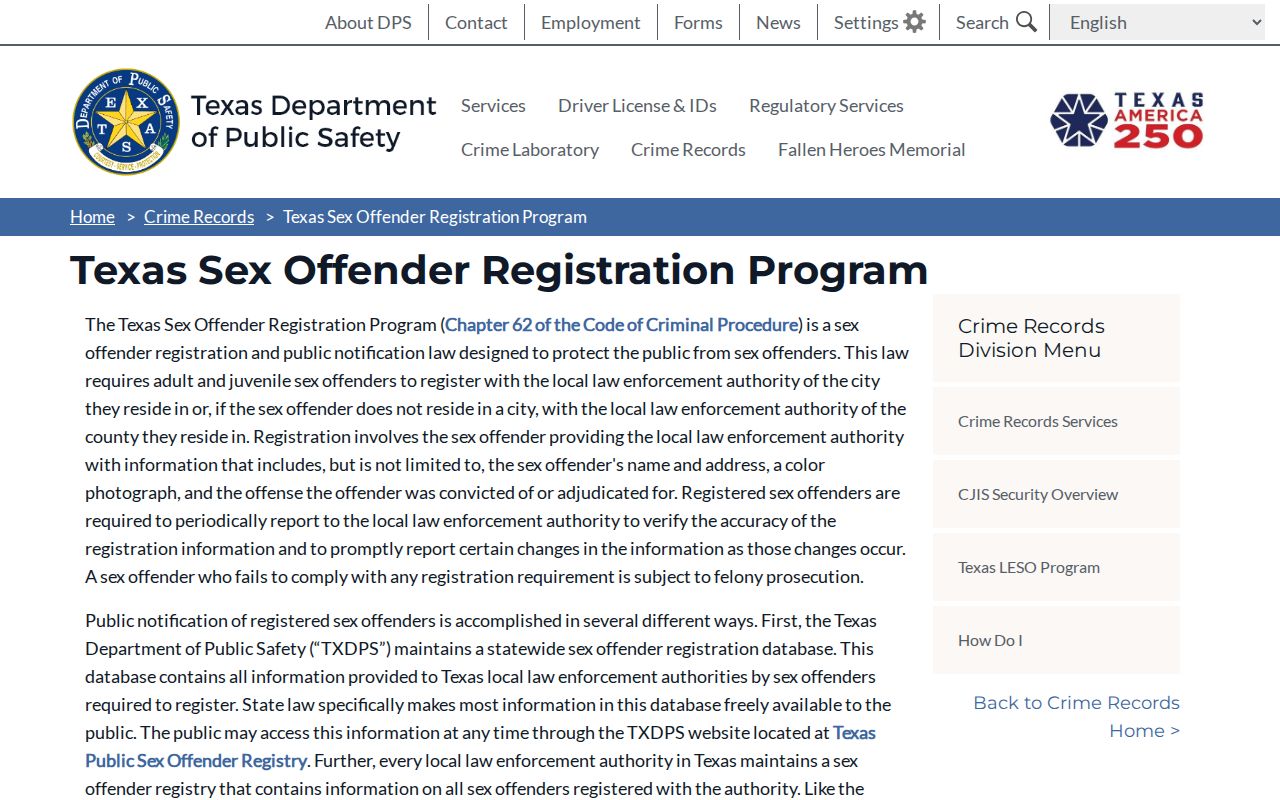
The program page helps separate formal Cooke County notice duties from rumor or an unofficial neighborhood post. Confirm a Cooke County notice against the DPS profile and the registering office.
When Cooke County registry information looks outdated, save the Cooke County profile details and contact the office with jurisdiction. Gainesville Police is the route inside Gainesville. Cooke County Sheriff CID handles the Cooke County registration channel outside a municipality. Reporting a suspected Cooke County lapse allows the registrar to check compliance; it does not authorize a resident to confront anyone.
Cooke County Registry Duty Rules
“Ten years” is not a universal countdown from conviction. For an adult offense in the ten-year group, Texas measures from the later event named in Chapter 62, which can involve release from a penal institution, discharge from community supervision, or dismissal and discharge. A lifetime offense does not shift into that group merely because ten years passed.
Verification frequency is a separate question from total duration. A Cooke County profile may show a status that calls for annual, 90-day, or another statutory schedule. The registering authority checks the required data, while DPS publishes the public portion. This split is why a status concern belongs with local police or sheriff CID even though the public search is statewide.
Use offense-specific DPS guidance when Cooke County dates seem unclear. Court and registration events can differ, and a Cooke County public profile should not be reclassified from a broad offense label alone.
Using Registry Information Lawfully
Cooke County registry data supports personal, family, and community safety. It can help a resident understand an official notice, review an area, or verify whether a name matches a published profile. It cannot justify threats, harassment, intimidation, discrimination, or vigilantism. A listed offense and address should be read from the official profile without claims about other people at that location.
Texas registry warning: Texas Code of Criminal Procedure Chapter 62 governs public registration, and DPS warns that using registry information to threaten, harass, intimidate, or commit a crime may bring criminal or civil consequences. Use the data only for lawful safety purposes.
For suspected Cooke County noncompliance, report facts to Gainesville Police or Cooke County Sheriff CID based on residence. For an immediate danger, call emergency services. A Cooke County safety search works best when it stays grounded in the official profile, the correct Cooke County registrar, and the limits stated by Texas DPS.