
Cooke County Criminal History Checks
Start with the question, not a broad name query. Felony charges and judgments belong with the Cooke County District Clerk. Class A and B misdemeanor files run through the County Clerk criminal desk. A recent custody check belongs with the Cooke County Detention Center, while a police narrative comes from the agency that handled the event. Fine-only citations and related capias records stay with a municipal or justice court. This split matters because a blank result in one system says nothing about the others.
Gather the full legal name, date of birth, likely year, charge or event type, and any cause, incident, booking, or citation number. Name variants help with older Cooke County criminal records. Then use the narrowest official route and verify an outcome at its source.
- Choose the custodian: clerk for a case, sheriff or police for an arrest report, jail for custody, or DPS for statewide reported history.
- Search with the full name and birth date when the official system allows it. Add a case or incident number when known.
- Check the court level. Felony, misdemeanor, justice-court, and municipal records do not share one Cooke County index.
- Order the exact source document, such as an indictment, judgment, sentencing order, arrest report, or book-in and release sheet.
- Use a certified court copy or a DPS fingerprint personal review when identity or official proof is important.
For broader case detail, the Cooke County court case lookup follows the felony and misdemeanor clerk routes. A jail entry or initial charge should never stand in for the final judgment.
Cooke County Records Portal Login
The Cooke County clerks link a Texas Online Records gateway, but the public landing screen stops at account access. It does not expose a free field-by-field criminal case search before login. The screen asks for an email address or username, a password, and a reCAPTCHA challenge. Registration and password recovery are available, and the gateway warns users to keep only one browser window open.
The official Cooke records gateway is one route, not a complete county criminal history product. Verify that the account is searching the right clerk and case level. If login fails or the file is absent, use the District Clerk email, mail, fax, e-file, or counter request. County Clerk staff can assist with open misdemeanor records but do not perform unrestricted research for a requester.
| Portal field | Type | Required | Use |
|---|---|---|---|
| Email/Username | Text | Yes | Registered account credential |
| Password | Password | Yes | Account access; reset link is offered |
| reCAPTCHA | Challenge | Yes | Anti-automation check |
The official Cooke County home page shows the courthouse identity and office directory.
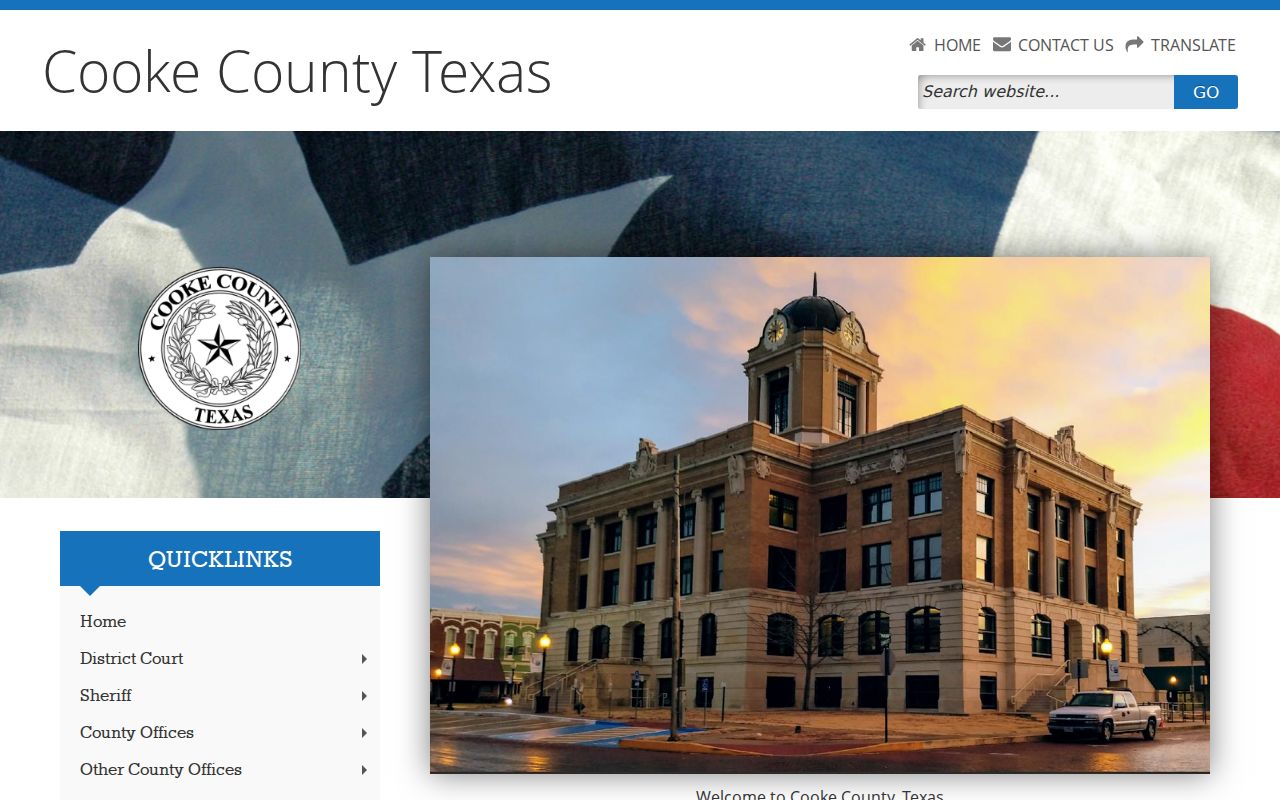
That county page is a useful starting point when a Cooke County criminal record must be routed to a specific elected office.
Official Background Checks in Texas
The Texas DPS Criminal History Conviction Search releases public conviction and deferred-adjudication information reported to DPS. A Cooke County user registers, buys credits, and searches with a full last and first name. A middle or maiden name and a complete or partial birth date can narrow a match. DPS uses Soundex and name and birth-date combinations, so common names can return the wrong candidate or miss the intended person.
One search credit costs $1. Credit-card purchases add 2.25 percent per credit plus $0.25 per transaction. A no-match search still spends a credit, and opening more candidate files uses more credits. Preview may show descriptors and a photo when available before a full record is opened. An offline result needs manual DPS processing and later notice through the Message Center.
The DPS instructions and search interface display that narrower statewide product.

Use the DPS result beside Cooke County source records because state data depends on reports sent by local criminal justice agencies.
Cooke County Record Identity Matches
A Cooke County fingerprint personal review is the strongest Texas identity match. DPS Fingerprint Applicant Services of Texas uses IdentoGO by IDEMIA for capture. The personal-review workflow is available through service code 11HRZF or by calling 1-888-467-2080 from 8 a.m. to 9 p.m. Central. The published total is $25: $10 for fingerprint service and $15 for the criminal-history record. DPS says processing after receipt may take about ten business days, apart from mail time.
The live appointment locator should choose the site because the research did not verify a current static enrollment-center listing inside Cooke County. The Cooke County enrollment process collects identity and contact details, appointment place and time, and payment. For a federal self-review, the FBI Electronic Departmental Order route costs $18 before any approved channeler charge.
The official IdentoGO enrollment screen is the appointment front door for the FAST channel.
This method is meant for reviewing your own fingerprint-linked record and avoids the identity risk built into a name-only search.
Kinds of Criminal Records
Cooke County criminal records describe different steps in one event. The Cooke County investigating agency writes the incident or offense report. A Cooke County arresting agency records the custody action. The detention center creates the booking entry, while a prosecutor and grand jury or court create the charging instrument. Clerks then keep the case docket, pleadings, judgment, sentence, and fees. DPS receives qualifying arrest-cycle and disposition reports for the statewide CCH system.
Each Cooke County source has its own limits. Active-investigation facts and protected victim or child data can be withheld. A warrant may be sealed or absent from a public portal. Community-supervision details can be restricted even when a judgment says supervision was ordered.
- Incident report: agency account of reported facts, location, involved roles, officers, and case number.
- Booking record: jail record of intake, custody identifiers, initial charges, dates, and release information.
- Court case file: filed charge, docket, motions, hearings, disposition, sentence, and financial entries.
- DPS CCH: Texas identity and arrest cycles with outcomes that contributing agencies reported and matched.
- Registry or custody listing: a purpose-specific current record, not a general Cooke County background check.
Cooke County Criminal Records Courthouse
The present Cooke County Courthouse at 101 South Dixon Street holds both major local court-record counters. The District Clerk occupies Room 207 and keeps felony files from the 235th Judicial District Court. The County Clerk is in Room 108, with its criminal and civil desk handling most Class A and B misdemeanor records. The courthouse also houses the district and county attorneys, which helps explain why filed charges and court outcomes sit apart from the sheriff and jail files on County Road 451.
This is the fourth courthouse on the site. Cooke County began with an 1850 log building. A later frame courthouse burned, and the 1880 limestone courthouse fell to the 1909 fire. Lang & Witchell designed the current Beaux Arts structure, completed in 1912. Its restored courtroom, atrium, stained glass, copper dome, and memorial clocks make the building more than a filing address.
The Texas Historical Commission courthouse record documents that history and restoration.
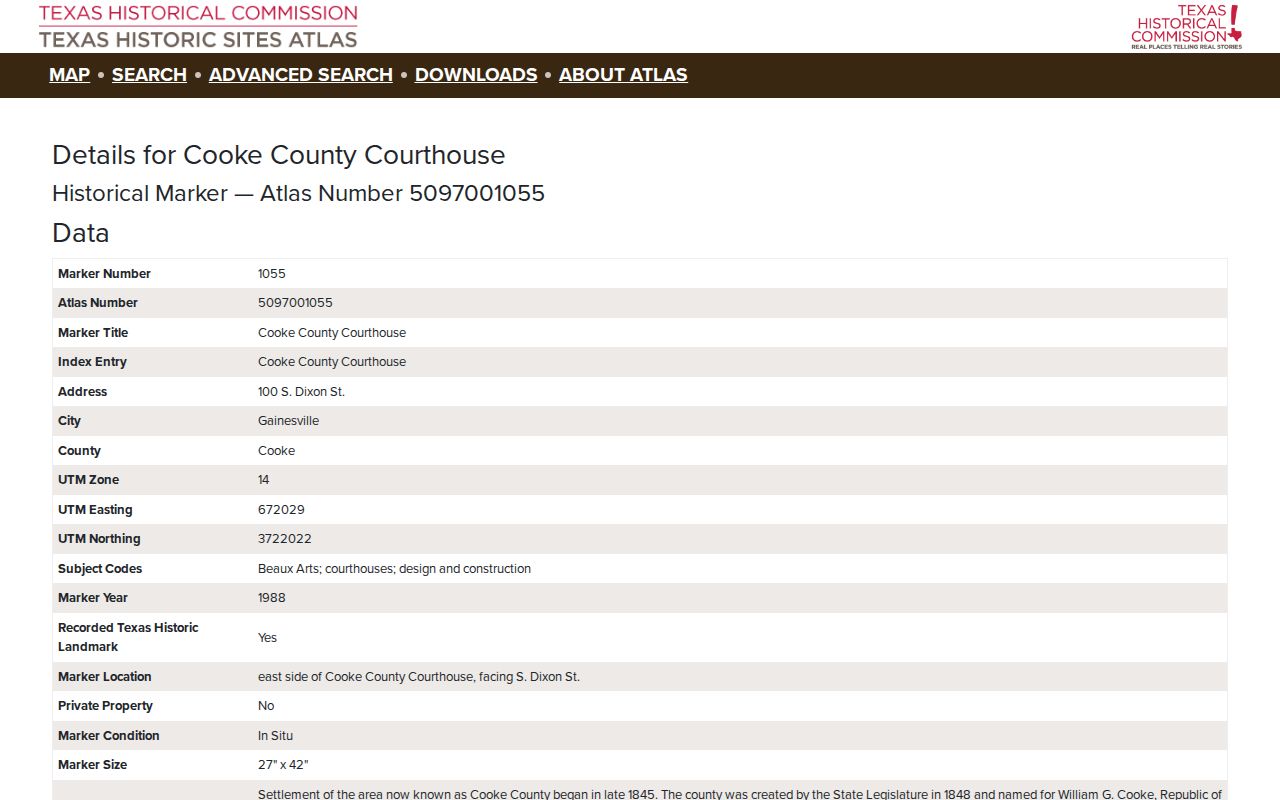
Cooke County rededicated the restored courthouse in 2011, while its active criminal case files remain tied to the clerks inside.
Cooke County Criminal Records: Contents
A Texas CCH record tied to Cooke County begins with identity data and event cycles. The identity segment can include a legal name, aliases, date of birth, sex and race descriptors, a State Identification number, an FBI number, and fingerprint transaction identifiers. An arrest cycle can add the arrest date, agency, offense descriptions, and tracking number. Prosecutor and court reporting can add a cause number, filed charge, disposition, sentence, and community-supervision entry.
Cooke County court files contain more procedural detail than a public DPS name result. A complaint, indictment, judgment, sentencing order, docket event, hearing, motion, attorney entry, and financial assessment may live there. The Cooke County jail record instead centers on custody. It may connect a person to a booking number, agency, initial charge, bond, and book-in or release dates. Public copies can redact Social Security numbers, protected people, juvenile details, and financial-account data.
| Name and identifiers | Legal name, aliases, birth date, descriptors, SID, FBI or tracking numbers when part of that product. |
|---|---|
| Arrest and booking | Agency, event date, alleged offense, SO or booking number, custody dates, and source-specific release facts. |
| Charges and statutes | Initial jail allegations or later complaint, information, or indictment, which may not match. |
| Disposition | Conviction, acquittal, dismissal, deferred adjudication, no-bill, or other recorded status. |
| Sentence | Confinement, fine, restitution, or community-supervision terms stated in the judgment. |
| Custody or supervision | Current jail or prison status and public court-ordered supervision facts, depending on the source. |
Four Cooke County Record Systems
One Cooke County name can produce four different answers without any source being wrong. The Cooke County jail answers whether a person is now in local custody. A clerk file answers what was filed and decided in a specific case. A sheriff or police report describes the source event and arrest. DPS answers what public conviction or deferred-adjudication data reached the statewide repository. Time, jurisdiction, reporting delays, and legal restrictions shape each result.
Use the source that fits the date and question. A recent arrest may not yet have a filed case. A court dismissal can exist while an old booking sheet remains. A person sentenced to state prison moves from the Cooke County custody system to the TDCJ locator. A federal case or prisoner belongs in PACER or the Bureau of Prisons locator, not in a Cooke clerk or jail search.
- Disposition
- The final or current recorded result for a charge or case.
- Deferred adjudication
- Texas supervision before final adjudication; it can remain public unless nondisclosed.
- Capias
- A court writ directing arrest, often tied to a missed court step or judgment.
- Cause number
- The court identifier that makes a clerk search and document order more exact.
- Expunction
- A Texas order directing removal or destruction of qualifying records as Chapter 55A permits.
Texas Public Access Laws
Cooke County public access depends on the record and custodian. The Texas Public Information Act governs public information held by many governmental bodies, but judicial records follow separate rules. Cooke County tells requesters to send a written request to the elected official or department that has the file. A mistaken recipient has no duty to forward it. Ask for an identifiable record, date, cause, incident, or subject rather than asking the office to answer broad questions.
Key Texas laws:
Government Code Chapter 552 grants access to public information subject to listed exceptions.
Government Code Chapter 411 controls DPS criminal-history dissemination and nondisclosure.
Code of Criminal Procedure Chapter 66 sets the criminal-history reporting flow to DPS.
Rule of Judicial Administration 12 provides a separate route for covered judicial records.
Code of Criminal Procedure Chapter 55A governs expunction eligibility and orders.
Active investigations, restricted juvenile matters, protected victim information, and private identifiers can be withheld or redacted. No result is a clean-record certificate.
Cooke County Sheriff Record Choices
The Cooke County Sheriff open-records form offers five practical choices: an offense report, an arrest report, call sheets, a letter of clearance, proof of incarceration, or other specified information. The arrest report is described as a book-in and release sheet with charges and dates in and out. Proof of incarceration is narrower and covers only incarceration and release dates. Those products are not substitutes for a clerk judgment.
The form asks for the request date, requester name, phone, mailing and email address, the subject’s name and birth date, date range, and record-specific identifiers. Delivery can be by email, fax, mail, or a call when pickup is ready. Send it to records@co.cooke.tx.us, fax 940-668-3255, or mail or deliver it to 300 County Road 451, Gainesville, Texas 76240. Charges may apply, but the form publishes neither a fixed base fee nor a promised turnaround.
The official Cooke County Sheriff page identifies the agency and its records location.
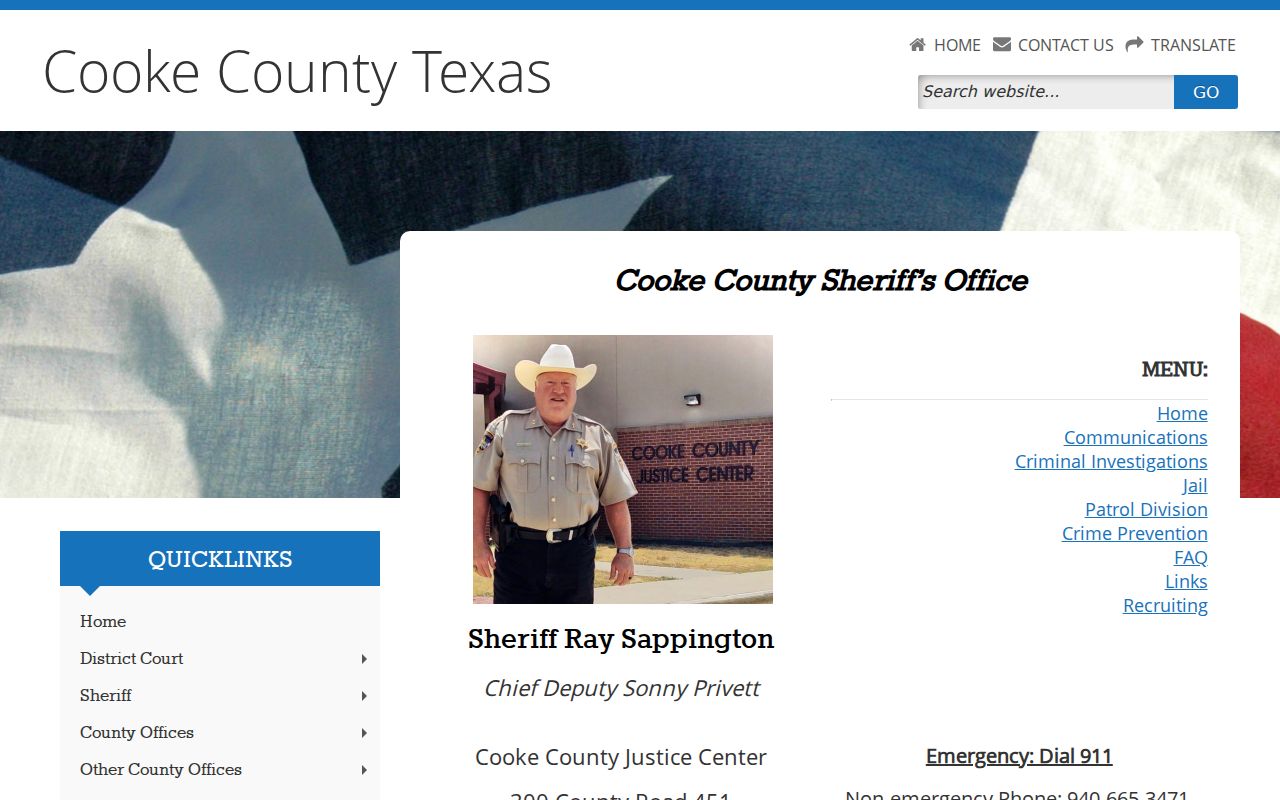
The sheriff directs court-record questions to the District or County Clerk and crash-report questions to the proper highway or investigating agency.
Restricted, Sealed & Expunged Records
Texas expunction and nondisclosure are not the same. An expunction under Chapter 55A can direct listed agencies to return, destroy, or remove qualifying records. Paths can include an acquittal, pardon, actual-innocence relief, some no-bills or dismissals after statutory conditions, and certain identity-error cases. A conviction or ordinary completed deferred adjudication does not become eligible merely because time passed.
An order of nondisclosure limits public release after an eligible disposition, while specified agencies can retain access. Cooke County directs a petitioner to file through the court and clerk with jurisdiction. Its instructions require the right agency list, a hearing setting, and separate notice or order. The current total filing fee was not found in the accessible official material, though the clerk offers a statement for inability to afford costs.
After Cooke County relief, keep certified copies and check each source. A court portal, jail, police file, and DPS CCH can update at different times. Dismissal alone does not erase the booking and incident trail.
Missing Cooke County Criminal Dispositions
DPS builds Cooke County CCH entries from records sent by Texas criminal justice agencies. A late, incomplete, or unmatched report can leave an arrest without its final result. Cooke County has appeared in DPS data-reporting improvement-plan material, so a missing state disposition should trigger a source comparison rather than a guess.
First find the correct Cooke County cause number and request the judgment or dismissal from the clerk. Confirm that the name, birth date, tracking identifiers, and charge match the state cycle. If the clerk file has the outcome, begin the correction with the court or agency that contributed the entry, then use the DPS review and challenge channel. A fingerprint personal review provides the strongest identity base for that process.
| Cooke record request | Published charge | Published timing |
|---|---|---|
| District Clerk search without cause number | $5 | Older form says 5 to 7 business days |
| Plain copy | $1 per page | Newer form says allow up to 10 business days |
| Certificate or seal | $5 | Added to requested copy service |
| Sheriff record request | Not published | No promised turnaround on form |
City-by-City Criminal Records in Cooke County
Cooke County criminal records often begin with a city office. Gainesville has distinct police-report, public-information, online incident, and municipal court routes. Muenster relies on its police office and City Secretary, while Lindsay combines City Hall, police, and municipal court at one counter. These city records can later connect to Cooke County jail and court records, but the first report stays with the agency that created it.
Gainesville Record Check
Population 17,394 · Police and Municipal Court share the public safety building.
Muenster Record Check
Population 1,731 · Police and the City Secretary provide local record routes.
Lindsay Record Check
Population 1,018 · City Hall houses police and the monthly Municipal Court.
Cooke County Criminal Custody Layers
The Cooke County Detention Center is a 212-bed jail for local booking, pretrial custody, and qualifying shorter terms. Its official Cooke County Isogent link supplies the current-custody route, with the jail phone and lobby as fallbacks when the client application fails. A written sheriff request reaches older book-in and release facts. In fiscal year 2025, the county reported 2,236 people jailed. That activity figure is not a crime rate.
A person moved into Texas prison belongs in the TDCJ Inmate Information Search. A federal prisoner belongs in the Bureau of Prisons locator. VINELink provides custody notifications. Searching all three layers can resolve a blank Cooke County jail result without treating absence from one system as proof that no custody exists.
The official TDCJ inmate search accepts name, TDCJ number, or SID routes.
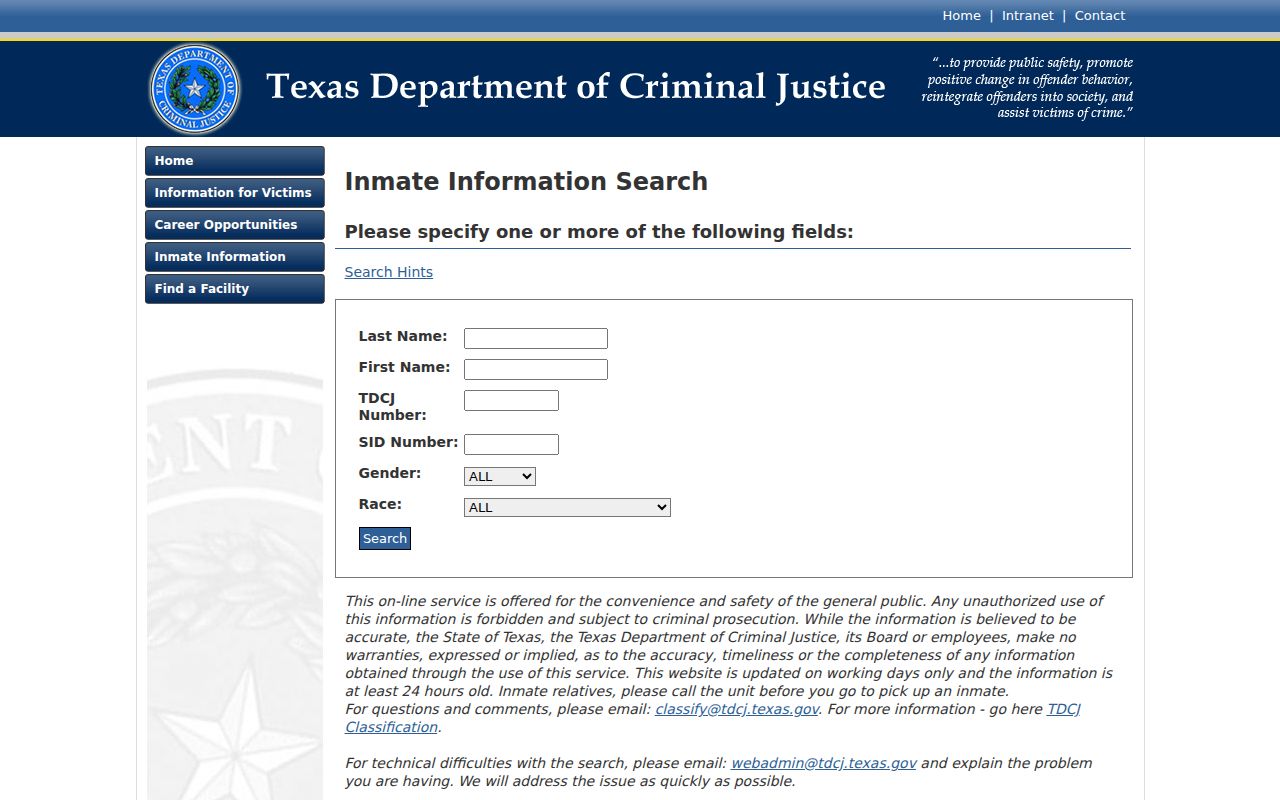
This statewide tool covers sentenced Texas custody, not current booking status at the Cooke County jail.